
Africa’s renewable energy and climate policy, when viewed in the global scenario, represents both a response to urgent development needs and a contribution to the worldwide transition toward sustainability. Although Africa contributes the least to global greenhouse gas emissions, it is disproportionately affected by climate change impacts such as droughts, floods, coastal erosion, and desertification. This imbalance has shaped Africa’s climate agenda around the twin priorities of adaptation and sustainable energy access, rather than emissions reduction alone.
At the global level, agreements such as the Paris Agreement have influenced African countries to develop Nationally Determined Contributions that integrate renewable energy expansion with climate resilience strategies. These commitments are increasingly reflected in national policies that prioritize solar, wind, hydro, and emerging green hydrogen technologies. However, unlike developed regions where the energy transition is primarily driven by decarbonization goals, Africa’s transition is deeply tied to the need to expand electricity access to millions of people who are still off-grid or underserved.
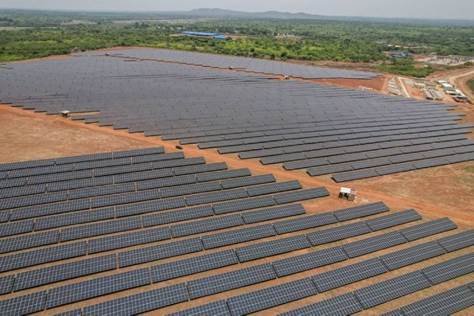
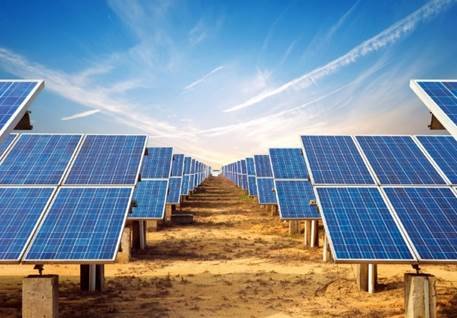
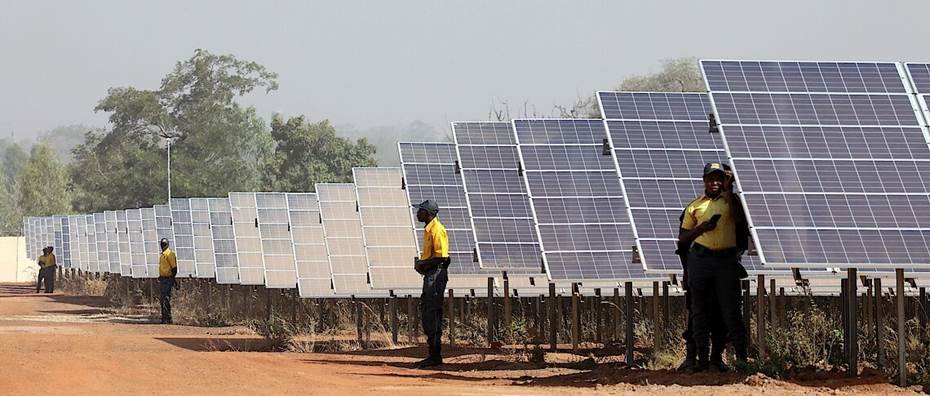
In this context, renewable energy in Africa is not only an environmental solution but also a development instrument. Solar energy, in particular, has become the most dominant renewable option due to Africa’s high solar irradiation levels and rapidly decreasing technology costs. Across regions such as North Africa, East Africa, and parts of West Africa, there is increasing deployment of utility-scale solar farms, mini-grids, and decentralized solar home systems. These developments are gradually transforming energy access patterns, especially in rural and peri-urban communities.
Despite this progress, Africa’s renewable energy sector remains constrained by significant structural challenges. Limited access to finance continues to be a major barrier, as the continent receives a relatively small share of global renewable energy investment. Weak transmission and distribution infrastructure also restrict the integration of large-scale renewable projects into national grids. Furthermore, dependence on imported technologies limits local value creation and slows the development of indigenous manufacturing capacity within the renewable energy value chain.
In the global policy space, Africa is increasingly positioning itself not only as a beneficiary of climate finance but also as a strategic partner in the energy transition. The continent holds vast reserves of critical minerals such as cobalt, lithium, and nickel, which are essential for battery storage and electric mobility systems. This gives Africa a significant role in the global clean energy supply chain. In addition, emerging initiatives around green hydrogen, particularly in North and Southern Africa, are creating pathways for Africa to become an exporter of clean energy to global markets.
At the same time, global climate finance mechanisms and partnerships such as Just Energy Transition frameworks are shaping how Africa transitions from fossil fuels to renewables. However, African policymakers continue to emphasize that the transition must be fair, inclusive, and supportive of economic development. This means that natural gas is often considered a transitional fuel in many African countries, as governments seek to balance energy security with long-term decarbonization goals.
Regional cooperation is also becoming increasingly important in Africa’s energy future. Power pools and cross-border electricity trade are being strengthened to improve energy reliability and optimize resource distribution. Initiatives such as Mission 300, which aims to expand electricity access to hundreds of millions of people, reflect the scale of ambition required to address Africa’s energy deficit while aligning with global sustainability targets.
Looking ahead, Africa’s role in the global energy transition is expected to expand significantly. While the continent may not yet lead in installed renewable capacity, it is emerging as a critical frontier for future energy systems due to its demographic growth, resource endowment, and high renewable potential. The interaction between global climate policy and Africa’s development priorities will therefore continue to shape a unique transition pathway, one that combines energy access, industrialization, and climate resilience within a single framework of sustainable development.